Wholesale Ladies Fashion Bangladesh Market Guide: Complete Sourcing Guide for Retailers

Starting a women’s fashion business in Bangladesh can look simple from the outside: find attractive clothing at a wholesale price, add a margin, and sell it through a boutique, Facebook page, e-commerce website, or retail store.
In practice, successful fashion sourcing requires much more planning.
The wrong product can remain unsold for months. The wrong size mix can lock capital into slow-moving inventory. A design that looks attractive in a supplier’s photograph may not match the fabric, finishing, or colour customers expect. Even a product with a good wholesale price may become unprofitable after transportation, packaging, advertising, returns, and operational expenses are included.
That is why a proper Wholesale Ladies Fashion Bangladesh Market Guide should focus on more than where to buy. It should explain what to buy, how much to buy, how to evaluate a supplier, how to check quality, how to calculate the real product cost, and how to use sales data before placing the next wholesale order.
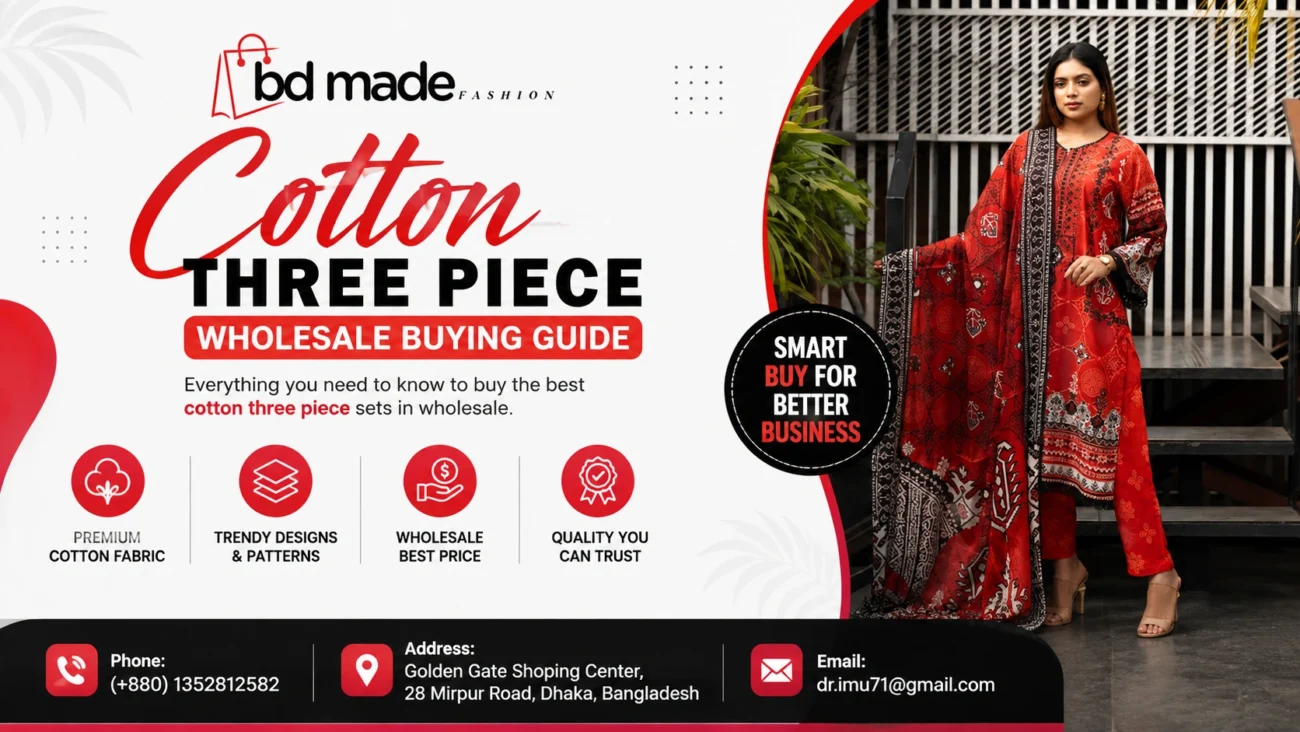
For retailers exploring women’s ethnic wear, BD Made Fashion currently organizes its Salwar Kameez collection into multiple ready-to-wear and unstitched options, making it easier to compare different product formats before planning inventory.
Whether you are building a small online store or expanding an established boutique, this guide will help you create a more structured wholesale buying process.
1. What Is Wholesale Ladies Fashion?
Wholesale ladies fashion refers to women’s clothing purchased for business resale rather than primarily for personal use.
A retailer, reseller, boutique owner, or online seller may purchase multiple pieces from a supplier and then sell them individually to customers.
Wholesale women’s fashion can include:
- Salwar kameez
- Three-piece sets
- Two-piece outfits
- One-piece tunics
- Stitched dresses
- Unstitched three-piece sets
- Boutique collections
- Cotton outfits
- Lawn suits
- Embroidered dresses
- Silk outfits
- Georgette sets
- Chanderi outfits
- Muslin dresses
- Festive collections
- Office wear
- Occasion wear
- Seasonal fashion collections
Wholesale buying does not automatically mean purchasing hundreds of pieces.
For a small online seller, a wholesale order may mean a carefully selected mixed collection. For a large retailer, it can mean considerably larger quantities of proven designs.
The important point is that the purchase should be planned around resale potential.
2. Why Wholesale Sourcing Strategy Matters
The success of a fashion business depends heavily on inventory.
A retailer can have an attractive website, professional photographs, and strong advertising, but poor inventory decisions can still create losses.
A good sourcing strategy helps a business answer four important questions:
What should we buy?
Products should match the customer profile.
How much should we buy?
Quantity should reflect demand, capital, and product risk.
When should we buy?
Seasonal fashion requires early planning.
When should we reorder?
Best sellers should be identified before stock completely runs out.
For anyone researching ladies fashion wholesale Bangladesh, product sourcing should be treated as a business process rather than an occasional shopping trip.
3. Define Your Target Customer Before Visiting a Supplier
One of the most common wholesale mistakes is purchasing products before defining the customer.
A beautiful design is not automatically the right product for your business.
Before sourcing, write down:
- Customer age range
- Main location
- Typical spending range
- Preferred clothing type
- Preferred fabrics
- Preferred colours
- Common sizes
- Daily wear or occasion wear
- Stitched or unstitched preference
- Traditional or contemporary style preference
Example: Working Women
If your primary customers are working women aged 25–40, your inventory may focus on:
- Comfortable cotton
- Subtle embroidery
- Easy-care materials
- Practical colours
- Ready-to-wear sets
- Office-friendly designs
- Moderate pricing
Example: University Students
Your collection may focus more on:
- Lightweight two-piece outfits
- Printed cotton
- One-piece tunics
- Trend-conscious colours
- Affordable pricing
- Easy everyday wear
Example: Premium Boutique Customers
Your sourcing may include:
- Chanderi
- Silk
- Muslin
- Georgette
- Detailed embroidery
- Karchupi work
- Chikankari
- Kantha-inspired work
- Limited statement pieces
Your target customer should determine your buying decisions—not your personal fashion preference.
4. Choose Your Core Product Category
Trying to sell everything at once makes stock management difficult.
A new retailer should usually build the business around one strong primary category before adding too many secondary products.
Possible core categories include:
Salwar Kameez
Suitable for customers looking for traditional daily, office, festive, and family-event clothing.
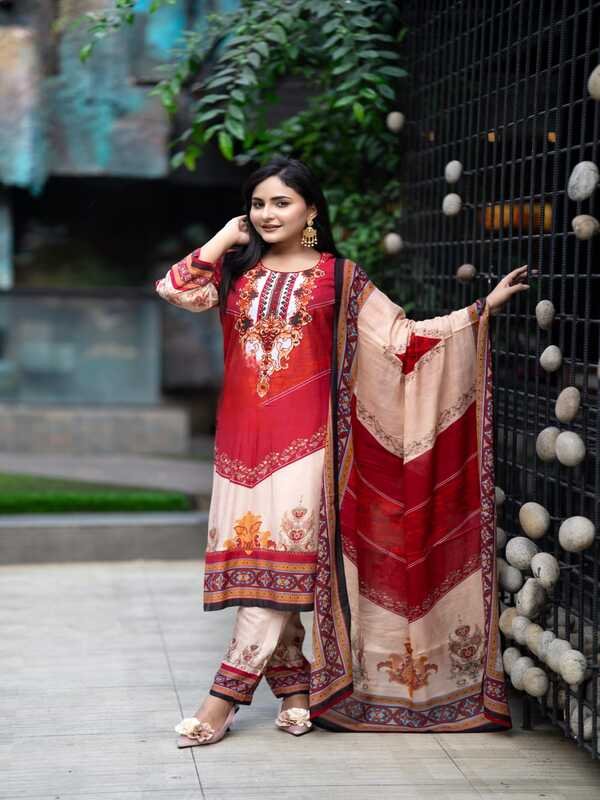
BD Made Fashion’s current women’s Salwar Kameez collection includes both stitched and unstitched formats.
Stitched Three-Piece
Suitable for customers who want ready-to-wear convenience.
Unstitched Three-Piece
Suitable for buyers who prefer tailoring and personalized fitting.
Boutique Collection
Suitable for customers looking for more distinctive fabrics, embroidery, handwork, or premium designs.
One-Piece and Two-Piece
Useful for younger customers and everyday fashion segments.
Seasonal Fashion
Collections can be built around:
- Eid
- Pohela Boishakh
- Wedding season
- Summer
- Winter
- Puja
- Family occasions
A focused collection is easier to market and easier for customers to understand.
5. Stitched Fashion: Advantages and Risks
Ready-to-wear clothing is convenient for customers because tailoring is not required.
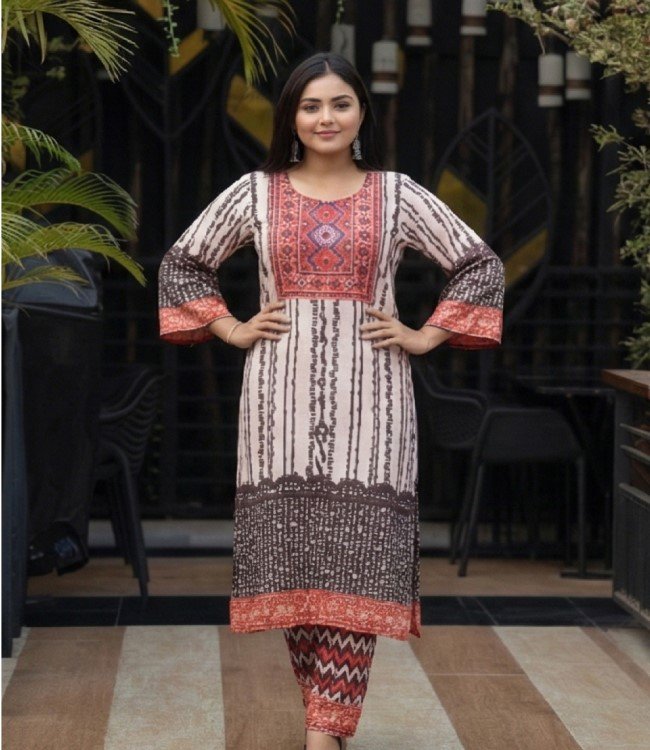
BD Made Fashion’s current stitched Salwar Kameez collection includes ready-to-wear three-piece sets and one-piece styles across different designs and price points.
Benefits of Stitched Products
- Ready for immediate use
- Easy to photograph on models
- Convenient for online customers
- Suitable for gifting
- Faster purchase decision
- Easier to present as complete outfits
Main Challenge: Size Inventory
Stitched products require careful size planning.
A design may sell well overall but leave unsold stock in less popular sizes.
For example, suppose you purchase 20 pieces:
| Size | Quantity |
| S | 2 |
| M | 5 |
| L | 6 |
| XL | 5 |
| XXL | 2 |
This is only a starting example.
After 30–50 delivered orders, use real sales data to change your future size ratios.
6. Unstitched Fashion: Advantages and Risks
Unstitched fashion offers greater flexibility because customers can tailor the outfit according to their measurements.
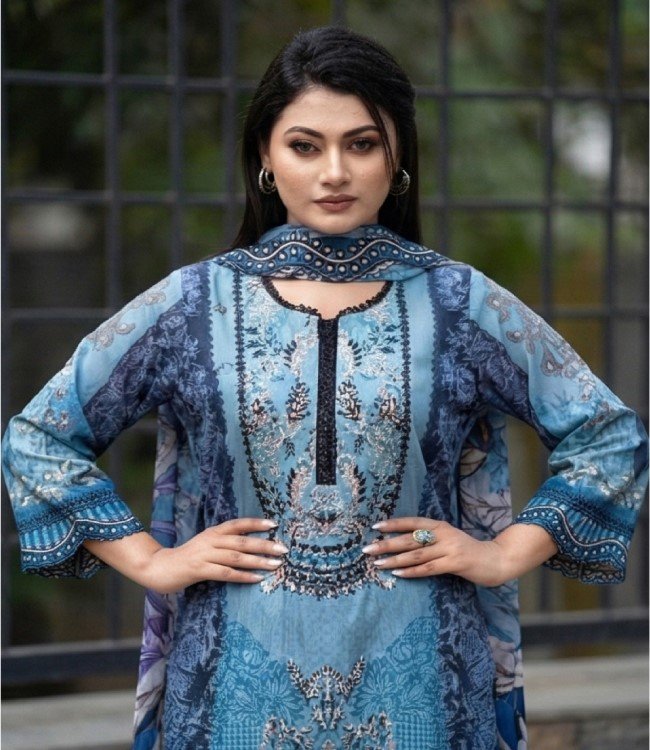
BD Made Fashion currently has a separate Unstitched Salwar Kameez collection featuring printed and embroidered lawn three-piece options.
Benefits
- Fewer sizing limitations
- Attractive for tailoring customers
- Suitable for online three-piece stores
- Easier to offer wider colour variety
- Customers can customize fitting
Information You Should Verify
Before purchasing unstitched products, confirm:
- Kameez fabric length
- Trouser fabric
- Dupatta material
- Fabric type
- Embroidery placement
- Printed versus woven design
- Colour accuracy
- Whether lining is required
- Washing instructions
Incomplete product information can lead to customer complaints later.
7. When Should You Stock Boutique Collections?
A boutique collection should not simply mean “expensive clothing.”
Boutique inventory should offer some form of differentiation.
This may come from:
- Fabric
- Embroidery
- Handwork
- Colour combination
- Limited design
- Finishing
- Styling
- Occasion value
BD Made Fashion’s Boutique Three Piece collection includes boutique-format products, and the current shop displays items such as Chanderi three-piece sets with Chikankari and applique work as well as embroidered boutique sets.
A retailer researching a boutique clothing supplier Bangladesh should compare not only design but also the amount of capital each premium product requires.
If a premium item costs several times more than a daily-wear product, you may need fewer pieces and more variety.
8. Build a Balanced Wholesale Collection
One of the safest approaches for a new seller is controlled variety.
Instead of investing heavily in one design, divide inventory between proven products and test products.
A sample inventory mix might look like this:
| Inventory Type | Suggested Share |
| Proven or familiar designs | 40% |
| New designs for testing | 25% |
| Seasonal products | 15% |
| Premium boutique products | 10% |
| Complementary products | 10% |
This is not a fixed formula.
Your actual ratio should change after you collect customer data.
The goal is to avoid having too much capital tied to products whose demand has not yet been proven.
9. How to Evaluate a Wholesale Supplier
Price is only one part of supplier selection.
A reliable supplier can reduce:
- Product mismatches
- Delays
- Defects
- Restocking problems
- Customer complaints
- Inventory uncertainty
Ask the supplier:
- What is the minimum order?
- Is mixed-design ordering available?
- Can different colours be mixed?
- Can different sizes be mixed?
- Is a sample available?
- What is the defect policy?
- Can defective items be exchanged?
- How long does delivery take?
- Are invoices provided?
- How often is stock updated?
- Can successful products be reordered?
- Is the same design likely to return?
- Is product photography available?
- Are real product videos available?
- Are business quantities handled separately?
- What are the payment terms?
- Is advance payment required?
- Are product codes used consistently?
- How are seasonal orders handled?
- How should buyers confirm stock before payment?
For a deeper sourcing process, the Wholesale Three Piece Supplier Bangladesh guide explains BD Made Fashion’s current process for checking designs, wholesale pricing, minimum order requirements, stock, and delivery information.
10. Understand Minimum Order Quantity
Minimum Order Quantity, commonly called MOQ, refers to the lowest quantity or purchase level required by a supplier for a wholesale transaction.
An MOQ might be:
- 5 pieces
- 10 pieces
- 12 pieces
- One full size run
- A fixed quantity per design
- A minimum purchase value
MOQ matters because it directly affects inventory variety.
Suppose you have BDT 50,000.
Supplier A requires 10 pieces of every design.
Supplier B allows mixed designs.
Even if Supplier A offers a slightly lower unit price, Supplier B may give a new retailer more flexibility because the same capital can be spread across more designs.
The best wholesale deal is not always the lowest unit price.
11. Why Mixed Designs Can Reduce Risk
Consider two inventory plans.
Plan A
30 pieces:
- Design A: 10
- Design B: 10
- Design C: 10
You can test only three designs.
Plan B
30 pieces:
- 10 different designs
- 3 pieces of each
Plan B provides more information about customer preference.
You can identify:
- Stronger colours
- Better fabric response
- Popular embroidery
- Better price points
- Faster-moving styles
After that, larger quantities can be placed for proven products.
This approach is especially useful for new online sellers.
12. Quality Checking Before a Wholesale Purchase
Quality control should begin before a large order is placed.
Fabric Check
Examine:
- Thickness
- Texture
- Transparency
- Softness
- Colour consistency
- Weaving
- Print quality
- Fabric description accuracy
Stitching Check
For ready-made garments, inspect:
- Neckline
- Shoulder seams
- Sleeves
- Side seams
- Hem
- Buttons
- Zippers
- Loose threads
- Inside finishing
Embroidery Check
Look for:
- Loose thread
- Missing sections
- Uneven placement
- Fabric pulling
- Poor finishing
- Loose stones or decorative elements
Colour Check
Compare pieces under natural light if possible.
Product photographs can appear different because of:
- Studio lighting
- Editing
- Screen brightness
- Camera settings
Online sellers should avoid promising perfect colour matching between a display screen and the physical product.
13. Sample Testing Before a Large Order
A sample order can answer questions that product photos cannot.
Test:
- Fabric comfort
- Actual colour
- Stitching quality
- Product measurements
- Shrinkage
- Colour bleeding
- Customer response
- Supplier communication
- Delivery speed
- Packaging condition
For a new supplier, the first order can be treated as a supplier test rather than a profit-maximization exercise.
A small mistake across five products is manageable.
The same mistake across 100 products can become expensive.
14. Calculate the Real Wholesale Product Cost
Do not calculate profit using only:
Selling Price – Wholesale Purchase Price
A product has additional costs.
Use:
Real Product Cost = Purchase Price + Transport + Packaging + Marketing Allocation + Payment Cost + Return Risk + Other Direct Costs
Example
| Cost Item | Amount |
| Wholesale purchase price | BDT 1,200 |
| Transportation | BDT 40 |
| Packaging | BDT 60 |
| Photography allocation | BDT 30 |
| Marketing allocation | BDT 120 |
| Payment/transaction cost | BDT 20 |
| Return-risk allocation | BDT 50 |
| Real Product Cost | BDT 1,520 |
If the selling price is BDT 2,000:
Initial Contribution = BDT 2,000 – BDT 1,520 = BDT 480
Monthly overhead expenses may still need to be deducted.
15. Gross Profit vs Net Profit
Gross profit and net profit are not the same.
Suppose:
Monthly Revenue = BDT 200,000
Cost of Products Sold = BDT 130,000
Then:
Gross Profit = BDT 70,000
Now deduct:
| Monthly Expense | Amount |
| Advertising | 15,000 |
| Staff | 10,000 |
| Packaging overhead | 5,000 |
| Website/software | 2,000 |
| Returns/losses | 5,000 |
| Other expenses | 4,000 |
| Total | 41,000 |
Then:
Net Profit = BDT 70,000 – BDT 41,000 = BDT 29,000
High sales do not automatically mean high profit.
16. Three Wholesale Budget Examples
BDT 25,000 Starter Plan
| Category | Budget |
| Product stock | 15,000 |
| Samples | 1,500 |
| Transportation | 1,000 |
| Photography | 1,000 |
| Packaging | 1,500 |
| Marketing | 3,000 |
| Return reserve | 1,000 |
| Emergency cash | 1,000 |
| Total | 25,000 |
This budget is more appropriate for a small product test than a wide-scale launch.
BDT 50,000 Growth Plan
| Category | Budget |
| Inventory | 30,000 |
| Samples/quality testing | 2,000 |
| Transportation | 1,500 |
| Photography | 2,500 |
| Packaging | 2,500 |
| Marketing | 6,000 |
| Website/support | 2,000 |
| Return reserve | 1,500 |
| Emergency cash | 2,000 |
| Total | 50,000 |
This gives more room to test designs without spending the entire budget on inventory.
BDT 100,000 Structured Plan
| Category | Budget |
| Core inventory | 55,000 |
| Premium boutique testing | 7,000 |
| Photography/video | 5,000 |
| Packaging | 5,000 |
| Website/tools | 5,000 |
| Marketing | 10,000 |
| Transportation | 3,000 |
| Return reserve | 4,000 |
| Emergency/restock cash | 6,000 |
| Total | 100,000 |
A larger budget should not automatically mean a larger initial stock.
Keep enough cash available to reorder products that actually sell.
17. Example 30-Piece Inventory Plan
A small women’s fashion store might start with:
| Category | Quantity |
| Stitched cotton three-piece | 8 |
| Printed unstitched three-piece | 7 |
| Embroidered unstitched sets | 5 |
| Two-piece outfits | 4 |
| Premium boutique outfits | 3 |
| Seasonal designs | 3 |
| Total | 30 |
The objective is not to make this exact mix permanent.
The objective is to collect sales data.
18. Colour Planning for Wholesale Inventory
Fashion customers do not all want the same colour.
Build a mix.
Neutral Colours
- Black
- Navy
- Beige
- Off-white
- Brown
Bright Colours
- Red
- Magenta
- Royal blue
- Orange
- Emerald
Soft Colours
- Lavender
- Peach
- Mint
- Powder blue
- Blush pink
Seasonal Colours
Seasonal colour demand may shift around:
- Eid
- Pohela Boishakh
- Wedding season
- Summer
- Winter
Do not buy an entire collection in colours that simply match your personal preference.
19. Size Planning for Stitched Wholesale Fashion
Size data is one of the most valuable assets in a stitched fashion business.
Track every delivered sale by size.
For example:
| Size | Units Sold |
| S | 8 |
| M | 22 |
| L | 31 |
| XL | 27 |
| XXL | 12 |
Your next purchase should reflect the pattern.
Do not keep buying equal quantities of every size if your customers clearly prefer certain sizes.
This is one reason wholesale women’s clothing Bangladesh sourcing works better when purchasing decisions are based on recorded sales rather than guesses.
20. Seasonal Buying Strategy
Wholesale fashion requires timing.
Buying the correct product too late can still create slow stock.
Eid
Possible focus:
- Embroidered three-piece
- Boutique collections
- Premium Salwar Kameez
- Festive colours
Pohela Boishakh
Possible focus:
- Red and white
- Cotton
- Traditional prints
- Ethnic motifs
Wedding Season
Possible focus:
- Silk
- Chanderi
- Georgette
- Embroidery
- Karchupi
- Premium boutique sets
Summer
Possible focus:
- Cotton
- Lawn
- Lightweight fabrics
- Breathable materials
- Softer colours
Start sourcing before peak demand, not after your competitors have already sold through the strongest designs.
21. Wholesale Three Piece Dhaka: What Retailers Should Compare
For buyers researching wholesale three piece Dhaka, price comparison alone is not enough.
Compare:
- Fabric
- Kameez length
- Trouser fabric
- Dupatta
- Embroidery
- Print quality
- Stitching if ready-made
- Colour consistency
- Wholesale terms
- MOQ
- Restocking
- Product codes
- Supplier communication
- Delivery timing
A three-piece set with a slightly higher purchase price can sometimes be the better business choice if the quality, finishing, and repeat availability are stronger.
22. Online Sourcing vs Physical Showroom Buying
Both approaches have advantages.
Online Sourcing
Useful for:
- Product shortlisting
- Checking categories
- Comparing styles
- Reviewing prices
- Sending product codes
- Repeat orders
- Sellers outside Dhaka
Physical Showroom Buying
Useful for:
- Touching the fabric
- Checking colour
- Inspecting embroidery
- Verifying stitching
- Comparing multiple products
- Discussing quantities directly
A hybrid method can work well:
Step 1: Shortlist products online.
Step 2: Prepare product codes.
Step 3: Confirm current availability.
Step 4: Visit or contact the supplier.
Step 5: Place the final order after confirming terms.
23. Product Photography After Wholesale Buying
Supplier photographs are convenient, but your own photography can make your brand more distinctive.
For important products, photograph:
- Full front
- Full back
- Fabric close-up
- Embroidery
- Sleeve
- Neckline
- Trouser
- Dupatta
- Side view
- Model fit
- Short video
Accurate photography can also reduce disappointment caused by unrealistic product presentation.
24. Build a Wholesale Stock Tracking System
Every product should have a code.
Example:
- BMF-ST-001
- BMF-UN-012
- BMF-BT-026
Record:
- SKU
- Product name
- Supplier
- Purchase date
- Purchase price
- Selling price
- Fabric
- Size
- Colour
- Quantity purchased
- Quantity sold
- Returns
- Damaged units
- Current stock
- Reorder level
Without stock records, it becomes difficult to know which products are actually profitable.
25. Identify Fast-Moving and Slow-Moving Products
Fast-Moving Product
A product may be considered strong when it:
- Sells quickly
- Receives repeated enquiries
- Has low returns
- Generates repeat requests
- Requires restocking
These products deserve priority in future buying.
Slow-Moving Product
Before immediately discounting it, test:
- New photography
- Better product description
- Styling video
- Bundle offer
- Different audience
- Live presentation
- Moderate promotion
Sometimes the product is not the problem; the presentation is.
26. Keep Backup Suppliers
Depending on one supplier for every category creates risk.
A supplier may:
- Run out of stock
- Stop producing a design
- Change prices
- Experience delays
- Have limited sizes
- Reduce availability during peak seasons
Maintain a short list of suppliers for important categories.
However, do not constantly switch suppliers only to save a small amount.
Consistency can be valuable.
27. Common Wholesale Fashion Buying Mistakes
1. Buying Only Because the Price Is Low
Low purchase cost cannot compensate for poor demand.
2. Buying Before Defining the Customer
Inventory should solve a customer need.
3. Ordering Too Much of One Design
This increases dead-stock risk.
4. Ignoring Size Data
Especially dangerous for stitched clothing.
5. Ignoring Colour Data
Popular colours should be identified from sales.
6. Skipping Samples
New suppliers should be tested.
7. Failing to Inspect Fabric
Photographs cannot show fabric feel.
8. Ignoring Return Costs
Returns affect real profitability.
9. Forgetting Transportation
Transport is part of product cost.
10. Using the Entire Budget for Stock
You still need marketing and operating cash.
11. Not Tracking Stock
This makes restocking inconsistent.
12. Buying Seasonal Stock Too Late
Timing matters.
13. Assuming Sales Equal Profit
Always calculate net profit.
14. Relying on One Supplier
Keep alternatives.
15. Reordering Based on Memory
Use sales records.
28. A 30-Day Wholesale Fashion Launch Plan
Days 1–5: Research
- Define customer
- Select product niche
- Choose price range
- Review competitors
- Set budget
Days 6–10: Supplier Research
- Shortlist suppliers
- Compare products
- Review MOQ
- Request samples
- Collect product codes
Days 11–15: Product Testing
- Check fabrics
- Check stitching
- Test colours
- Calculate costs
- Decide selling prices
Days 16–20: Initial Purchase
- Buy controlled inventory
- Create SKUs
- Prepare stock sheet
- Photograph products
Days 21–25: Store Preparation
- Upload products
- Prepare packaging
- Set delivery process
- Publish policies
- Create content
Days 26–30: Soft Launch
- Start selling
- Track enquiries
- Record delivered orders
- Track returns
- Identify early best sellers
29. What to Track During the First 90 Days
Track:
- Total enquiries
- Confirmed orders
- Delivered orders
- Cancelled orders
- Returns
- Revenue
- Gross profit
- Net profit
- Best-selling design
- Best-selling fabric
- Best-selling colour
- Best-selling size
- Average order value
- Advertising cost per order
- Repeat customers
- Slow-moving stock
Your first 90 days should produce information for the next wholesale purchase.
That data may be more valuable than guessing which new collection will become popular.
30. How BD Made Fashion Fits Into Wholesale Sourcing
BD Made Fashion currently presents women’s Salwar Kameez, stitched clothing, unstitched sets, and boutique products through separate product categories. Its wholesale information also directs business buyers to confirm product lists, required quantities, available designs, minimum order requirements, pricing, stock, and delivery information before ordering.
This can be useful for:
- Boutique owners
- Facebook sellers
- Online fashion retailers
- Clothing resellers
- Small retail shops
- New fashion entrepreneurs
The strongest sourcing approach is still to confirm current availability and business terms before finalizing a purchase. Lear more kids saree if you want to know Saree Mela.
31. BD Made Fashion Showroom in Dhaka
BD Made Fashion lists its physical showroom at:
BD Made Fashion
Golden Gate Shopping Center
28 Mirpur Road
Dhaka 1205, Bangladesh
The current contact page lists showroom hours as 10:00 AM to 8:00 PM, Saturday to Thursday, and gives the store number as +88 01712-800900.
For current product availability, quantity requirements, and wholesale enquiries, use the BD Made Fashion Contact page before visiting or placing a larger order.
32. Final Wholesale Buying Checklist
Before paying for a major order, confirm:
- Target customer defined
- Product niche selected
- Budget fixed
- Product sample checked
- Fabric checked
- Stitching checked
- Embroidery checked
- Colour checked
- Measurements checked
- Wholesale price confirmed
- MOQ confirmed
- Mixed-design policy confirmed
- Mixed-size policy confirmed
- Defect policy confirmed
- Exchange terms confirmed
- Delivery time confirmed
- Transportation calculated
- Real product cost calculated
- Selling price decided
- Profit estimate calculated
- Stock sheet ready
- Product codes ready
- Restock process understood
- Emergency cash reserved
The fewer unanswered questions you have before ordering, the easier your inventory will be to manage.
33. Quick Wholesale Fashion Tips
- Start with controlled quantities.
- Test more designs before buying deep stock.
- Check fabric personally whenever possible.
- Confirm actual product measurements.
- Ask about MOQ before negotiating price.
- Understand the defect policy.
- Keep purchase records.
- Track size sales.
- Track colour sales.
- Separate gross profit from net profit.
- Reorder proven products early.
- Keep cash for restocking.
- Plan seasonal inventory in advance.
- Maintain backup suppliers.
- Base future orders on sales data.
34. Frequently Asked Questions
1. What is the Wholesale Ladies Fashion Bangladesh Market Guide?
The Wholesale Ladies Fashion Bangladesh Market Guide is a practical framework for retailers, boutique owners, and online sellers who want to plan women’s fashion sourcing, supplier selection, product quality, inventory, pricing, and wholesale purchasing more effectively.
2. What products are suitable for ladies fashion wholesale in Bangladesh?
Common categories include stitched Salwar Kameez, unstitched three-piece sets, two-piece outfits, one-piece tunics, cotton clothing, embroidered sets, boutique designs, and festive clothing.
3. Is stitched or unstitched fashion better for a new business?
Neither is automatically better. Stitched products offer ready-to-wear convenience but require size management. Unstitched products offer greater fitting flexibility but require customers to arrange tailoring.
4. How many designs should a new seller buy?
There is no universal number. A smaller mixed collection is often more useful for testing demand than purchasing a large quantity of an unproven design.
5. What is MOQ in wholesale clothing?
MOQ means Minimum Order Quantity. It is the minimum quantity or purchase amount required by a supplier for specific wholesale terms.
6. Should I buy mixed designs?
Mixed-design purchasing can reduce inventory risk by allowing you to test more styles with the same amount of capital.
7. How do I choose a wholesale supplier?
Compare product quality, pricing, MOQ, stock consistency, defect policy, communication, invoices, delivery time, and restock availability.
8. Should I order samples before a large wholesale purchase?
For a new supplier, sampling or making a smaller test purchase is a sensible way to evaluate quality and service.
9. How should I calculate a wholesale product’s real cost?
Add purchase price, transportation, packaging, marketing allocation, payment costs, return risk, and other direct expenses.
10. How much profit should I add to wholesale clothing?
There is no single correct percentage. Your margin must cover direct product costs, operating expenses, returns, marketing, and the profit required by your business.
11. How should I manage sizes in stitched clothing?
Record actual sales by size and adjust future purchasing ratios based on your customer data.
12. What should a boutique clothing supplier Bangladesh buyer check?
Check fabric, embroidery, finishing, design differentiation, MOQ, product consistency, defect terms, and the amount of capital required by each premium item.
13. How can I reduce dead stock?
Use smaller initial quantities, maintain more design variety, track customer response, and reorder only proven products more aggressively.
14. Where can I explore BD Made Fashion wholesale products?
You can browse the Salwar Kameez, stitched, unstitched, and boutique collections on BD Made Fashion and then confirm current wholesale details with the business directly.
15. How can I contact BD Made Fashion about wholesale quantities?
Use the official contact page to confirm current availability, required quantity, pricing, and ordering information before purchasing.
Conclusion
A strong Wholesale Ladies Fashion Bangladesh Market Guide should help you make better inventory decisions, not simply show you where clothing is available.
Before placing a wholesale order, understand your customer. Decide whether your business needs stitched clothing, unstitched sets, daily wear, premium boutique products, or a combination of categories. Test new suppliers, inspect quality, calculate the complete product cost, and avoid investing too much money in an unproven design.
If you are researching ladies fashion wholesale Bangladesh, remember that variety alone does not make a profitable collection. Your products must match your customer’s budget, preferred fabric, colour, size, and occasion.
For wholesale women’s clothing Bangladesh, accurate stock records and profit calculations are especially important because successful sourcing becomes easier once you know exactly what your customers are buying.
Retailers researching wholesale three piece Dhaka should compare fabric quality, set components, wholesale terms, MOQ, restocking, and supplier reliability rather than focusing only on the lowest purchase price.
And when selecting a boutique clothing supplier Bangladesh, pay particular attention to distinctive design, finishing, fabric quality, handwork, and the amount of capital each premium product will hold.
Start with controlled quantities, gather real sales data, identify proven products, and use that information to make each future wholesale order stronger.
Explore Women’s Fashion for Your Business
BD Made Fashion offers stitched, unstitched, Salwar Kameez, and boutique product categories for customers exploring women’s fashion collections. Current stock and business-order terms should be confirmed directly before purchasing.
BD Made Fashion
Golden Gate Shopping Center
28 Mirpur Road, Dhaka 1205, Bangladesh