Cotton Three Piece Wholesale Buying Guide in Dhaka

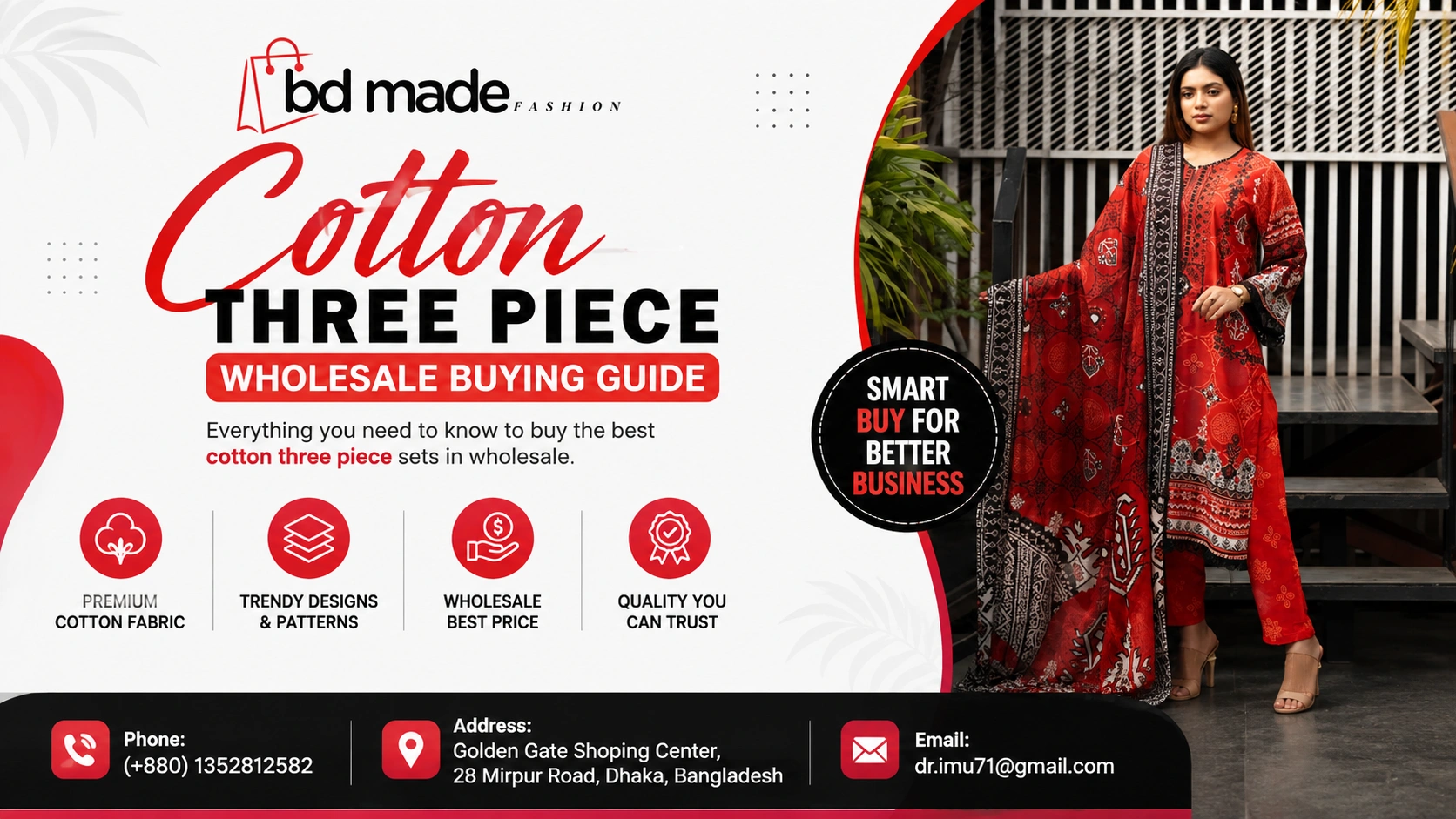
Cotton three piece wholesale buying becomes much easier when a retailer knows how to evaluate fabric quality, set composition, design demand, finishing, sizing, packaging, and total landed cost before placing an order. For Dhaka-based boutiques, Facebook sellers, online retailers, and small fashion businesses, buying attractive pieces at a low unit price is only one part of the decision. The better question is whether the collection will sell consistently, whether the fabric matches the season, and whether the expected retail margin remains healthy after transport, packaging, tailoring, and marketing expenses.
Cotton remains an important choice for everyday women’s clothing because buyers often look for softness, comfort, and practical wearability. Textile education sources describe cotton as a soft, breathable natural textile fibre, while cotton fabrics are available in many weights, constructions, finishes, and commercial types.
For a Dhaka business, sourcing should also reflect the local customer base. A collection that looks attractive in photographs may not perform well if the material feels uncomfortable, the colour differs from the image, the salwar is poorly proportioned, or the dupatta is too light for the expected price point. BD Made Fashion already carries both stitched and unstitched salwar kameez collections, including cotton and lawn-related styles, making fabric-led product selection a natural part of its women’s fashion positioning.
This guide explains how to assess a cotton three-piece collection, compare wholesale options, calculate buying costs, identify quality issues, and select products suitable for Dhaka retail.
What Is a Cotton Three Piece and Why Does Dhaka Need Better Wholesale Selection?
A cotton three-piece normally consists of three coordinated components: the kameez or top fabric, salwar or trouser fabric, and dupatta. Depending on the collection, these components can be plain, printed, embroidered, digitally printed, block printed, embellished, or combined with different fabric constructions. The word “cotton” should therefore not be treated as a complete quality description by itself. Two garments can both be marketed as cotton while feeling very different because of yarn, weave, fabric weight, finishing, printing, dyeing, construction, or blending.
For Dhaka buyers, this distinction matters because clothing demand is strongly influenced by comfort, season, occasion, and price sensitivity. A daily-wear customer may prefer a soft and breathable set, while a boutique customer may accept a more decorative construction when the embroidery and overall presentation justify the price.
Dhaka also has a highly competitive fashion market. Retailers sourcing around New Market, Gausia, Mirpur, online marketplaces, Facebook pages, and neighbourhood boutiques compete not only on price but also on design freshness, product photography, delivery experience, and perceived quality. A wholesale buyer therefore needs a repeatable inspection system instead of choosing stock simply because the catalogue image looks attractive.
A practical inspection should include:
- Fabric hand-feel and softness
- Fabric thickness and transparency
- Print clarity
- Colour consistency
- Embroidery density
- Stitching quality
- Dupatta size
- Salwar fabric quality
- Colourfastness expectations
- Measurement consistency
- Packaging and finishing
Cotton can also crease more easily than some synthetic materials, so customers should receive realistic care guidance. At the wholesale level, the retailer should know whether the supplier recommends cold or mild washing, whether dark colours need separate washing, and whether the fabric has been pre-shrunk.
A useful educational reference for understanding cotton fabric characteristics is Textile Learner’s cotton fibre guide.
For retailers, the key principle is simple: do not judge a wholesale set only by the printed design. Judge the entire product system.
Cotton Fabric Quality, Wholesale Pricing and Dhaka Buying Factors
Cotton three piece wholesale purchasing should begin with a quality checklist before price negotiation. A very low quoted price can become expensive if the retailer receives inconsistent colours, weak fabric, incorrect measurements, damaged embroidery, or a high return rate.
The table below gives a practical framework for comparing common wholesale considerations.
| Buying Factor | What to Check | Why It Matters |
| Fabric | Softness, weight, weave and surface | Determines comfort and perceived value |
| Kameez | Print, embroidery and fabric width | Main visual selling point |
| Salwar | Fabric strength and matching | Influences complete-set quality |
| Dupatta | Length, width and finishing | Strong effect on perceived value |
| Colour | Shade consistency | Reduces customer complaints |
| Stitching | Seam strength and neatness | Important for ready-made sets |
| Design | Floral, geometric, traditional or modern | Determines audience fit |
| Packaging | Folding and protection | Helps presentation and delivery |
| Size | Consistent measurements | Reduces exchanges |
| Cost | Unit price plus additional expenses | Determines real margin |
A retailer should separate purchase price from real product cost. If a set costs ৳1,000 from a supplier, the actual business cost may include transport, packaging, payment fees, photography, marketplace charges, tailoring corrections, and delivery-related losses. A sensible wholesale decision therefore considers total cost rather than supplier price alone.
BD Made Fashion’s website currently presents both stitched and unstitched salwar kameez categories, with cotton products appearing across its women’s fashion assortment.
After comparing wholesale options, the next step is to decide which product segment fits the intended customer. Daily-wear cotton, embroidered cotton, printed cotton, premium cotton, and mixed-fabric products can all occupy different price positions.
Why Choose BD Made Fashion in Dhaka for Cotton Fashion Sourcing?
Cotton three piece wholesale buyers need more than a product catalogue; they need confidence that the seller understands women’s fashion, product categories, quality presentation, and customer expectations. BD Made Fashion positions itself around Bangladeshi women’s fashion and currently lists stitched salwar kameez, unstitched salwar kameez, sarees, and related collections.
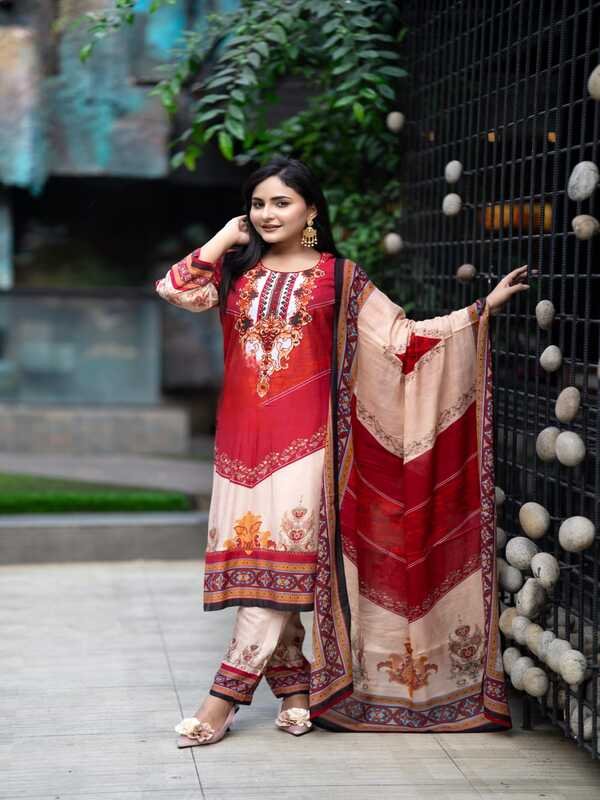
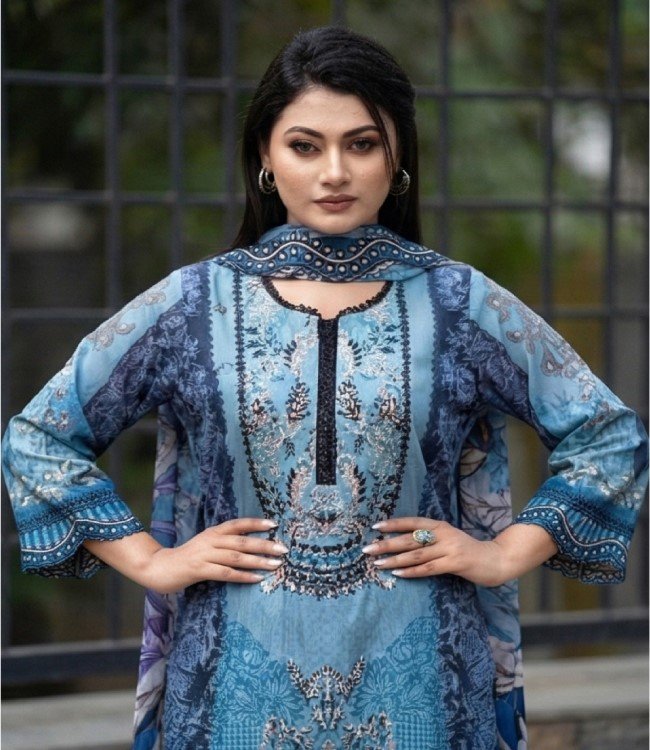
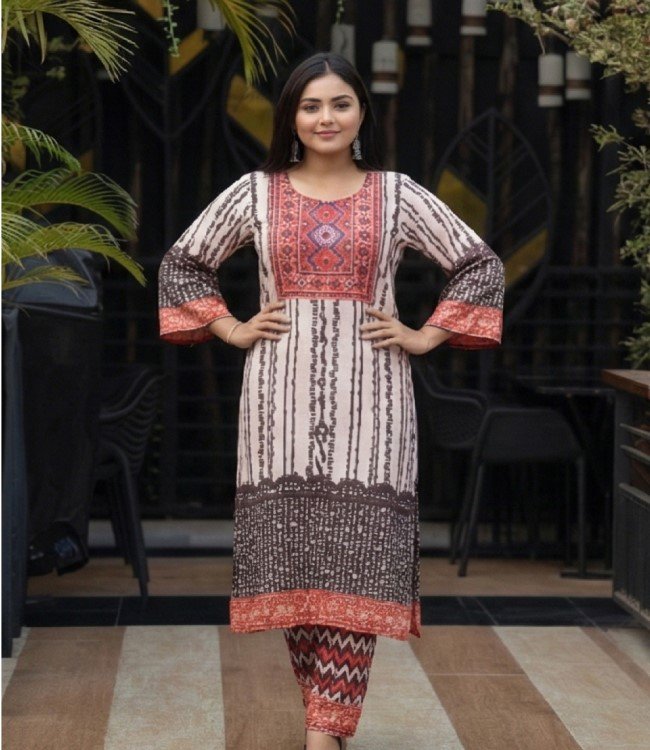
The website also shows cotton-based products such as embroidered cotton salwar kameez and digital-printed three-piece sets.
7 Practical Reasons to Consider BD Made Fashion
- Dhaka-based physical business presence
- Dedicated women’s fashion categories
- Stitched and unstitched options
- Cotton-focused product selections
- Online product browsing before purchase
- Cash-on-delivery availability across Bangladesh
- Direct contact for product and order questions
For buyers who want to explore the wider collection, the BD Made Fashion homepage provides an overview of the available categories.
Retailers can also compare options through the Stitched Salwar Kameez collection or review flexible fabric-based choices through the Unstitched Salwar Kameez collection.
Infographic Image Placement:
Infographic title: “7-Point Cotton Three-Piece Wholesale Quality Checklist”
Suggested visual elements: Fabric → Print → Dupatta → Salwar → Stitching → Colour → Final Cost.
How to Check Cotton Three Piece Quality Before Bulk Buying in Dhaka
Cotton three piece wholesale buyers should inspect a sample before committing to a large quantity. This is particularly important for retailers who sell through Facebook, websites, or physical boutiques because the customer cannot feel the fabric before purchase.
Start with the fabric. Rub a small section gently between your fingers and compare it with the supplier’s description. Look for an even surface and consistent construction. If the fabric is printed, inspect both the main body and smaller areas around seams. Uneven printing, blurred motifs, patchy colour, or visible defects can become more noticeable when the garment is displayed under bright shop lighting.
Next, inspect the colour. Dark navy, maroon, black, red, green, and other saturated shades should be checked carefully because shade variation between batches can create problems when a customer wants an exchange or repeat purchase. Retailers should record the supplier’s colour names or codes whenever possible.
The dupatta deserves separate attention. A visually attractive kameez can lose value if the dupatta is disproportionately short, too narrow, poorly finished, or made from an obviously cheaper material. Buyers should check its dimensions and edge finishing.
For stitched products, inspect shoulder seams, armholes, side seams, neckline finishing, sleeve construction, and hemline. A good design can still produce complaints if the stitching is uneven or measurements vary between pieces.
For unstitched sets, inspect fabric lengths and clearly identify which material is intended for which component. This is important when the customer plans custom tailoring.
Wholesale buyers should also ask:
- Is the price per complete set?
- Are all three components included?
- Are colours supplied randomly or selectable?
- Is there a minimum order quantity?
- What happens if pieces arrive damaged?
- Are sizes fixed or customizable?
- What is the delivery process?
- Are repeat designs available?
These questions turn a casual purchase into a professional sourcing process.
Cotton Three Piece Wholesale Buying Tips for Dhaka Retailers
Cotton three piece wholesale sourcing becomes more profitable when retailers buy according to customer demand rather than personal taste.
7 Buying Tips
- Test samples before large orders.
- Keep everyday and premium ranges separate.
- Compare total cost, not only unit price.
- Record fast-selling colours and patterns.
- Avoid overstocking one design.
- Photograph products in consistent lighting.
- Keep supplier and product records for repeat orders.
The most important tip is to build a balanced collection. A retailer may want floral designs because they personally look attractive, but customers may prefer a combination of floral, geometric, traditional, minimal, and embroidered styles.
Another useful strategy is to divide stock into three levels: entry-level daily wear, mid-range fashion wear, and premium occasion wear. This allows customers with different budgets to shop from the same business.
Retailers should also think about repeatability. If one design sells quickly but the supplier cannot replenish it, the retailer may need a replacement strategy. Conversely, a product that is easy to reorder can become a dependable part of the catalogue.
Dhaka’s competitive fashion environment rewards businesses that understand inventory turnover. Buying too much of a fashionable print can create dead stock when trends change. Buying too little can cause missed sales. The best approach is controlled testing followed by replenishment.
For business owners who want broader sourcing education, the BD Made Fashion Blog can be used alongside product research.
Cotton Three Piece Wholesale Buying Process: From Sample to Retail Shelf
Cotton three piece wholesale buying should follow a repeatable process rather than an improvised purchase.
Step 1: Define the Customer
Identify whether the intended customer wants daily wear, office wear, festive clothing, boutique fashion, modest wear, or premium embroidered styles.
Step 2: Select Fabric Categories
Compare cotton, cotton-lawn styles, blended fabrics, and decorative materials according to season and price range.
Step 3: Shortlist Designs
Choose several designs instead of putting the entire budget into one print.
Step 4: Order Samples
Inspect fabric, colour, measurements, stitching, and finishing.
Step 5: Calculate Real Cost
Add transportation, packaging, alterations, payment costs, and expected losses.
Step 6: Set Retail Price
Use the complete cost structure and the market position of the product.
Step 7: Test Sales
Use a small quantity to measure customer response.
Step 8: Reorder Winners
Increase stock only after the design demonstrates demand.
This process is useful for both physical retailers and online sellers. It reduces the risk of buying a large quantity based on a photograph or temporary trend.
How Much Does Cotton Three Piece Wholesale Cost in Bangladesh?
There is no single wholesale price that applies to every cotton three-piece set. The cost changes according to fabric construction, embroidery, printing, brand positioning, set components, workmanship, order quantity, and market conditions.
Online listings can show very different price points even for products described with similar fabric terminology. For example, a current Bangladesh marketplace listing describes a lawn-cotton three-piece set and displays a per-piece price while noting that wholesale pricing can change and should be confirmed before ordering.
For a retailer, this means published prices should be treated as reference points rather than guaranteed wholesale quotations.
What Usually Changes the Price?
| Factor | Lower Cost | Higher Cost |
| Fabric | Basic construction | Premium or specialty fabric |
| Design | Simple print | Detailed embroidery |
| Printing | Basic print | Detailed digital print |
| Dupatta | Simple matching fabric | Premium decorated dupatta |
| Workmanship | Standard | Hand/detail work |
| Quantity | Small order | Larger negotiated order |
| Packaging | Basic | Premium |
| Brand positioning | Value | Premium |
A sensible buyer should request the current price, available colours, minimum order quantity, and replacement policy before confirming a bulk purchase.
After purchasing, retailers should track selling price, gross margin, return rate, and sell-through. This creates a useful database for the next buying cycle.
Common Mistakes When Buying Cotton Three Piece Wholesale
Cotton three piece wholesale buyers often make avoidable mistakes when they focus too heavily on price or photographs.
First, some buyers assume that the word “cotton” automatically means premium quality. It does not. Cotton describes the fibre category, not every aspect of fabric performance.
Second, some retailers buy a large quantity without testing a sample. This can create serious problems if the colour, measurement, print, or fabric differs from expectations.
Third, buyers may ignore the dupatta. Customers often evaluate a complete set as one product, so a weak third component can reduce perceived value.
Fourth, some retailers calculate profit using selling price minus purchase price only. That ignores delivery, packaging, platform fees, marketing, tailoring corrections, and damaged goods.
Fifth, retailers may buy too many similar colours. A balanced collection often gives customers more choice and helps the business understand which colour families perform best.
Finally, online sellers should not rely on heavily edited photographs. Accurate photography and clear product descriptions reduce customer disappointment.
Frequently Asked Questions About Cotton Three Piece Wholesale in Dhaka
Cotton three piece wholesale buyers usually want clear answers about price, quality, quantity, process, and local sourcing.
1. What should I check first when buying cotton three-piece sets?
Check the actual fabric, complete three-piece composition, print or embroidery quality, colour consistency, measurements, and finishing. Price should be evaluated after these factors.
2. Is cotton suitable for everyday wear in Bangladesh?
Cotton is widely used for clothing and is valued for softness and breathability. However, the exact comfort depends on fabric construction, weight, finishing, and garment design.
3. Should I buy stitched or unstitched sets for resale?
Choose stitched sets when convenience and ready-to-wear presentation are important. Choose unstitched sets when customers value tailoring flexibility and customization.
4. How many pieces should a new retailer order?
There is no universal number. A safer approach is to test a manageable quantity across several designs and reorder the strongest sellers rather than committing the entire budget to one style.
5. What affects wholesale pricing most?
Fabric, workmanship, embroidery, printing, quantity, packaging, supplier positioning, and current demand can all influence the final quotation.
6. How can Dhaka retailers reduce wholesale buying mistakes?
Inspect samples, calculate the complete cost, verify all three components, record supplier information, and confirm replacement terms before placing a larger order.
7. Where can I contact BD Made Fashion?
You can contact BD Made Fashion directly using the details below.
Contact Information
Golden Gate Shoping Center
28 Mirpur Road, Dhaka, Bangladesh
Phone: (+880) 1352812582
Email: dr.imu71@gmail.com
How to Get to BD Made Fashion from Different Locations
Planning to visit BD Made Fashion in Dhaka? The showroom is located at Golden Gate Shopping Centre, 28 Mirpur Road, Dhaka 1205, in the New Market area. The location is convenient for shoppers coming from Dhanmondi, New Market, Science Lab, Elephant Road, Mohammadpur, Mirpur, Gulshan, Uttara, and other parts of Dhaka. The showroom is inside Golden Gate Shopping Centre, making it easy to combine your visit with shopping around the New Market and Mirpur Road area.
BD Made Fashion Address:
Golden Gate Shopping Centre,
28 Mirpur Road,
Dhaka 1205, Bangladesh
From New Market
If you are coming from Dhaka New Market, BD Made Fashion is very easy to reach because the showroom is located on Mirpur Road in the New Market area.
From New Market, come toward Mirpur Road and continue toward the Golden Gate Shopping Centre. The shopping centre is located at 28 Mirpur Road.
Suggested route:
New Market → Mirpur Road → Golden Gate Shopping Centre → BD Made Fashion
This is one of the easiest approaches for customers who are already shopping around New Market.
From Science Lab
If you’re coming from Science Lab, head toward Mirpur Road and continue in the direction of the Golden Gate Shopping Centre.
The showroom is located at 28 Mirpur Road, so Science Lab is one of the convenient nearby reference points for finding the location. Several businesses and shopping destinations are also listed around the same Mirpur Road/New Market area.
Suggested route:
Science Lab → Mirpur Road → Golden Gate Shopping Centre → BD Made Fashion
From Dhanmondi
Customers coming from Dhanmondi can approach BD Made Fashion through the roads connecting Dhanmondi with Mirpur Road and Science Lab.
A practical approach is to travel toward Science Lab, then continue along Mirpur Road toward Golden Gate Shopping Centre.
Suggested route:
Dhanmondi → Science Lab → Mirpur Road → Golden Gate Shopping Centre → BD Made Fashion
This route is particularly convenient for shoppers coming from areas around Dhanmondi, Jigatola and nearby neighborhoods.
From Elephant Road
If you are coming from Elephant Road, travel toward the Science Lab/New Market side and connect with Mirpur Road.
Once you reach the Mirpur Road area, continue toward Golden Gate Shopping Centre at 28 Mirpur Road.
Suggested route:
Elephant Road → Science Lab → Mirpur Road → Golden Gate Shopping Centre → BD Made Fashion
Because Elephant Road and New Market are closely connected shopping areas, this can be a convenient route for customers already visiting nearby fashion and shopping stores.
From Mohammadpur
Visitors coming from Mohammadpur can travel toward Dhanmondi/Science Lab and then connect to Mirpur Road.
From Science Lab, continue toward the New Market area until you reach Golden Gate Shopping Centre, 28 Mirpur Road.
Suggested route:
Mohammadpur → Dhanmondi → Science Lab → Mirpur Road → Golden Gate Shopping Centre → BD Made Fashion
The exact local-road sequence can vary depending on traffic, so using live GPS navigation is recommended.
From Mirpur
If you’re traveling from Mirpur, head toward the southern Dhaka side and connect to the Mirpur Road/New Market area.
Continue toward Science Lab/New Market, then follow Mirpur Road to Golden Gate Shopping Centre.
Suggested route:
Mirpur → Mirpur Road → Science Lab → New Market → Golden Gate Shopping Centre → BD Made Fashion
The name “Mirpur Road” can make the location especially easy to identify when using a map or asking a local driver for directions.
From Gulshan & Banani
Customers coming from Gulshan or Banani can travel toward central Dhaka and then connect to the Dhanmondi/Science Lab/New Market area.
After reaching Science Lab, continue along Mirpur Road toward Golden Gate Shopping Centre.
Suggested route:
Gulshan/Banani → Central Dhaka → Dhanmondi → Science Lab → Mirpur Road → BD Made Fashion
Because traffic conditions in Dhaka can change significantly during the day, live navigation is recommended for the fastest route.
From Uttara & Airport Area
If you’re coming from Uttara or Hazrat Shahjalal International Airport, travel toward central Dhaka and then continue toward the New Market/Science Lab area.
From Science Lab, follow Mirpur Road toward Golden Gate Shopping Centre, 28 Mirpur Road.
Suggested route:
Uttara/Airport → Central Dhaka → Science Lab → Mirpur Road → Golden Gate Shopping Centre → BD Made Fashion
For airport visitors, checking live traffic before starting the journey is especially useful.
By Bus
Public buses serving the New Market, Science Lab, Dhanmondi and Mirpur Road areas can be useful for reaching BD Made Fashion.
When traveling by bus, tell the driver or helper that you want to get down around New Market/Science Lab/Mirpur Road, depending on the route.
After getting off, look for Golden Gate Shopping Centre, 28 Mirpur Road.
Suggested approach:
Bus → New Market/Science Lab → Mirpur Road → Golden Gate Shopping Centre → BD Made Fashion
Since Dhaka bus routes and stops can change, check your current route through a live navigation or transit app before traveling.
By CNG, Ride-Sharing or Taxi
For customers using CNG, Uber, Pathao or a taxi, the easiest option is to give the driver the exact address:
BD Made Fashion, Golden Gate Shopping Centre, 28 Mirpur Road, Dhaka 1205.
You can also use Golden Gate Shopping Centre as the main landmark.
Suggested route:
Your Location → Golden Gate Shopping Centre → 28 Mirpur Road → BD Made Fashion
The business listing currently identifies BD Made Fashion as a clothing wholesaler at Golden Gate Shopping Centre, 28 Mirpur Road, Dhaka 1205.
From Dhaka University & Nilkhet
If you’re coming from Dhaka University, Nilkhet or the surrounding area, travel toward New Market and then connect to Mirpur Road.
From the New Market side, continue toward Golden Gate Shopping Centre.
Suggested route:
Dhaka University → Nilkhet → New Market → Mirpur Road → Golden Gate Shopping Centre → BD Made Fashion
This can be particularly convenient for students and shoppers visiting the New Market area.
From Shahbagh
Visitors coming from Shahbagh can travel toward New Market/Science Lab and then continue to Mirpur Road.
Suggested route:
Shahbagh → New Market → Mirpur Road → Golden Gate Shopping Centre → BD Made Fashion
Once you reach the New Market area, use Golden Gate Shopping Centre, 28 Mirpur Road as your primary landmark.
From Farmgate & Tejgaon
If you’re coming from Farmgate or Tejgaon, travel toward Dhanmondi/Science Lab and then connect to Mirpur Road.
Suggested route:
Farmgate/Tejgaon → Dhanmondi → Science Lab → Mirpur Road → Golden Gate Shopping Centre → BD Made Fashion
Traffic can be heavy during peak hours, so the actual road sequence may change depending on your navigation app.
BD Made Fashion Location & Showroom Information
BD Made Fashion
📍 Golden Gate Shopping Centre, 28 Mirpur Road, Dhaka 1205, Bangladesh
📞 +880 1712-800900
📧 dr.imu71@gmail.com
According to the official BD Made Fashion contact page, the showroom is open Saturday through Thursday, 10:00 AM–8:00 PM.
The showroom offers customers the opportunity to explore collections including sarees, stitched salwar kameez, unstitched salwar kameez and other ethnic fashion products in person.
Get Directions
BD Made Fashion Official Website
Google Maps search:
Get Directions to BD Made Fashion